Thursday, October 14, 2010

Chapter Seven: The Bypassed East


The Bypassed East is entirely different than Santa Clarita, California.  The Bypassed East is relatively cold, mountainous and it has a lot of percipitation.  The climate is often cold and damp, whereas Santa Clarita is often hot and dry.  The terrain is hilly, thin, and rocky, and Santa Clarita,is flat and the soil is claylike. 

Lombardi Ranch is a locally owned farm, that grows vegetables, and raises small animals. 

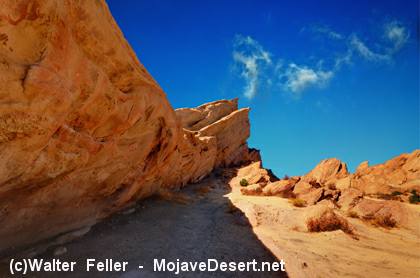
Great fishing and the forest can be found in the northwest part of the United States.  However, Castaic Lake is close by for boating and fishing, and one can take a great hike through Placertia Canyon.  To travel a little further north, approximately 5 miles north of Canyon Country, there is the famous Vasquez Rocks in Agua Dulce.  It is a wonderful place to spend the day hiking and horseback riding. 

The Santa Clarita Water agency, and The Newhall County Water District are the two main water companies that provide water to the region. 

Unlike the Bypassed East, the Santa Clarita region is heavily populated.  People are moving to Santa Clarita on a regular basis.  It is a great place to raise a family, and the freeways are expanding to make ones commute north or south less congested.


Current weather forecast for Santa Clarita, CA
Population in July 2009: 169,174. Population change since 2000: +12.0%


Median resident age:  33.4 years
California median age:  33.3 years
Zip codes: 91350, 91380, 91382, 91383.
Santa Clarita Zip Code Map


Estimated median household income in 2008: $87,396 (it was $66,717 in 2000)
Santa Clarita:  $87,396
California:  $61,021

Estimated per capita income in 2008: $34,692

Santa Clarita city income, earnings, and wages data

Estimated median house or condo value in 2008: $473,500 (it was $216,900 in 2000)
Santa Clarita:  $473,500
California:  $467,000
Mean prices in 2008: All housing units: $486,191; Detached houses: $536,343; Townhouses or other attached units: $444,517; In 2-unit structures: $250,000; In 3-to-4-unit structures: $282,163; In 5-or-more-unit structures: $318,689; Mobile homes: $43,989

Median gross rent in 2008: $1,486.
Percentage of residents living in poverty in 2008: 5.3%
(4.4% for White Non-Hispanic residents, 10.0% for Hispanic or Latino residents

LOMBARDI RANCH:
   See full size image


See full size image

Lombardi Ranch is located in Saugus, California.
29527 Bouquet Canyon Road.
Saugus, CA 91390


History and Information
My husband Bob and myself, along with our four children, are very proud of what has developed with luck and a lot of hard work. We are a real working farm, open from late summer to mid-November. Everything that we sell at our roadside stand we have grown right on our ranch. The property has been in the Lombardi Family since the early 1940's. Typical crops for a year are sweet corn, both yellow and white, tomatoes ripened on the vine, onions, peppers, both hot and sweet, summer squashes, winter squashes, melons of all different varieties, watermelons and flowers. We pride ourselves on the quality of our produce and strive to always have the best. During the month of October we add pumpkins, Indian corn, corn stalks and gourds, family fun and entertainment.
Our Halloween Pumpkin Festival began in 1989, but Lombardi Ranch has been selling pumpkins since 1968.
When our oldest daughter Julia was in preschool we invited her class for a tour of our ranch. It just happened that it was near Halloween and so at the end of the tour we gave each one of the fifteen children a small pumpkin and sent them on their way. They had a great time and told a couple of other preschools about their visit to the farm and the pumpkin patch. The next year we had three or four local preschools call us for a pumpkin tour. The children went home and told their parents about the farm and then the whole family would come to visit on the weekend. It has just blossomed from there.
We have certainly changed from that first pumpkin tour. Our focus has changed from Halloween to more of a Harvest theme, and we have as many as eight thousand school children of all grades come to Lombardi Ranch for a field trip, and we have yet to advertise our tours. Each child still has the opportunity to purchase a pumpkin, and each one goes home with a Lombardi Ranch balloon, sticker, pencil and candy. They are shown how several different kinds of vegetables are grown including beets, lettuce, carrots as well as the pumpkins. The children also get to see a real cow up close, often times with a nursing calf. We also have donkeys, a horse, a goat, sheep and llamas. Each one of these animals has something to teach our visitors.
In October the weekends have also evolved into something spectacular, with bands, a petting zoo, wagon rides and lots of things to see. We have striven to keep this very family oriented and a fun and safe place to spend a few hours on a weekend. In 1989 we initiated the first Scarecrow Contest. Every year since, we have had over 100 scarecrows entered into the contest with prizes in each of three categories.
My husband and I started farming when we had one child, two tractors and a lot of dreams. We now have three more children (and 13 grandchildren), several tractors and even more dreams for our ranch. We would like to welcome all of you to visit us!
- Joann Lombardi

http://www.lombardiranch.com/

CASTAIC LAKE


Castaic Lake is run by the County of Los Angeles Department of Parks and Recreation, Castaic Lake is a beautiful state water reservoir located just north of Santa Clarita on the Interstate 5 Freeway.
Along with providing fresh water to local communities, Castaic Lake has also remained dedicated to providing the public with a wonderful place to have fun! Whether you come to admire, relax and reflect upon the beauty, or pack in an extreme day of fun and excitement, there is something here for everybody!


Monday, October 11, 2010

Chapter Five: The North American Manufacturing Core


     Santa Clarita, California is considerably smaller than the North American Manufacturing Core.  The North American Manufacturing Core extends across sixteen Northern States in the United States and it produced over half of the steel that manufactured 71% of all cars.  In 2003, Fortune Magazine reported that of the 1000 top companies, 469 were headquartered in the 16 states that occupy the North American Manufacturing Core.  Santa Clarita, California is miniscule in comparison. 

     Santa Clarita’s local economy is primarily a service based economy with 42% of the businesses in the service sector. An additional 22% of businesses are in retail trade and 11% are in the finance, insurance, and real estate sector.

Here are some of the popular businesses in Santa Clarita, California.


 PRINCESS CRUISE LINES


 VALENCIA TOWN CENTER

 THE HYATT HOTEL


 SIX FLAGS MAGIC MOUNTAIN


 COLLEGE OF THE CANYONS


 City Hall

Message from the Mayor and City Council

Welcome, and thank you for your interest in what the City of Santa Clarita is doing regarding the American Recovery and Reinvestment Act of 2009 (ARRA). The Santa Clarita City Council is very committed to economic revitalization and keeping you informed. This portion of the City’s website is intended to keep the community up-to-date on what is happening with Santa Clarita and the American Recovery and Reinvestment Act of 2009.

What's New

Updated: November 19, 2009

Median Improvements at Sierra Highway and Newhall Avenue

You may have noticed crews hard at work preparing for the installation of a new median at Sierra Highway and Newhall Avenue.

The project will reduce the width of the existing striped median and construct a landscaped median to provide three through lanes in each direction on Newhall Avenue and a bus shoulder at the south-west and north-west corners of the intersection. The project will also include Americans with Disabilities Act access ramps at the intersection.

Follow this project from start to finish and see your tax dollars in action!!!

Updated: October 1st, 2009

Grant Programs

The City and Redevelopment Agency are offering small businesses and property owners , located within the Newhall Redevelopment Project Area, exclusive opportunities to apply for and receive funding through the Newhall Redevelopment Small Business Grant and the Old Town Newhall Building Improvement Grant programs.

Updated: September 23rd, 2009

City Receives $4.6 million Competitive ARRA Award

On September 22, 2009, the Federal Transit Administration (FTA) announced the City’s proposal to fund the installation of two additional solar bus canopies and solar carports at the Transit Maintenance Facility (TMF) was one of only 43 nationwide proposals granted an award through the Transit Investments in Greenhouse Gas and Energy Reduction (TIGGER) competitive grant program. In fact, of the 43 awards granted by the FTA, the City’s award of $4,620,000 was the fifth largest.

TIGGER is a $100 million competitive grant program designed to award transit agencies that are pursuing cutting-edge environmental technologies to help reduce global warming, lessen America’s dependence on oil and other fossil fuels, and create green jobs

Updated: July 9th, 2009

City Project Not Selected To Receive National Oceanic and Atmospheric Administration Award


On June 30, 2009, the National Oceanic and Atmospheric Administration released their list of recipients for awards through the Coastal and Marine Habitat Restoration Project Grant Program. Of the 814 proposals submitted, only 50 were awarded funding. Unfortunately, the City’s $2.7 million proposal to remove arundo and tamarisk from 297 acres of the Santa Clara River was not among those selected to receive an award.

City Receives “Authorization to Proceed” with First ARRA Projects


The City has received from the California Department of Transportation (CalTrans) the “Authorization to Proceed” (E-76’s) with its five designated ARRA Highway Infrastructure Program projects:

  • Asphalt Roadway Rehabilitation Phase I ($1,500,000)
  • Asphalt Roadway Rehabilitation Phase II ($1,619,899)
  • Whites Canyon Road at Soledad Canyon Road Right-Turn Pocket ($1,200,000)
  • Newhall Avenue at Sierra Highway Median ($305,000)
  • Bridge Rehabilitation to Various City Bridges ($550,101)

Three of these projects, Asphalt Roadway Rehabilitation Phase I, Asphalt Roadway Rehabilitation Phase II, and the Newhall Avenue at Sierra Highway Median are currently out to bid. The two remaining projects, Whites Canyon Road at Soledad Canyon Road Right-Turn Pocket and the Bridge Rehabilitation are set to begin the bidding process within the next two weeks. Construction is expected to begin in the late summer and last through the winter 2009/2010

Updated: July 2nd, 2009

City Council Adopts Resolution to Submit Applications for Neighborhood Stabilization Competitive Grant Program and Approved the Acceptance of $174,751 Byrne Justice Assistance Grant Program Allocation

On June 23, 2009, the City Council and the Redevelopment Agency held a joint public hearing and adopted a resolution authorizing the City’s Neighborhood Stabilization Competitive Grant Program (NSP-2) application for an amount to be determined. 

The NSP-2 provides competitive grants to state and local governments for the purpose of assisting in the redevelopment of abandoned and foreclosed homes. The NSP-2 allows for the same eligible activities as the State Neighborhood Stabilization Program (NSP-1).  Those activities are as follows:

  • Establish financing mechanisms for purchase and redevelopment of foreclosed-upon homes and residential properties, including such mechanisms as soft-second, loan loss reserves, and shared-equity loans for low-and-moderate-income homebuyers;
  • Purchase and rehabilitate homes and residential properties that have been abandoned or foreclosed upon, in order to sell, rent, or redevelop such homes and properties;
  • Establish land banks for homes that have been foreclosed upon;
  • Demolish blighted structures; and
  • Redevelop demolished or vacant properties (also includes using funds for site acquisition).

Submittal of the City’s NSP-1 application was authorized by the City Council and the Redevelopment Agency on June 9, 2009.

One important distinction between the programs is the federally, competitive NSP-2 requires at minimum either returning one hundred (100) abandoned or foreclosed homes back to productive use or eliminating their negative effect.

The City and Redevelopment Agency are currently exploring potential projects/activities that may qualify for funding and also be competitive at the federal level. The minimum funding threshold for applications is $5 million.

Council also approved the acceptance of the City’s $174,751 ARRA allocation through the United States Department of Justice’s Byrne Justice Assistance Grant Program (JAG).  This award will be used to supplement Citizens Option for Public Safety (COPS) funding from the State of California. This state funding source was recently reduced in response to the state’s current budget deficit. 

These JAG funds will be used for the salaries of two Career Offender Burglary Robbery Apprehension (COBRA) detectives for a period of approximately 5 months.  The COBRA program helps the City reduce juvenile crime and prevent gang violence.
Updated: June 29th, 2009

PUBLIC NOTICE

- Notice of Public Review and Comment Period for Neighborhood Stabilization Program 2 (NSP 2) Funding. Click here to view document.

Updated: June 10th, 2009

City Council Adopts Resolutions to Submit Applications for Neighborhood Stabilization Program Allocation and Energy Efficiency and Conservation Block Grant (EECBG) Recovery Act Allocation


On June 9, 2009, the City Council and the Redevelopment Agency held a joint public hearing and adopted a resolution approving the City’s Neighborhood Stabilization Grant application for $1,187,000 in funding allocated by the State of California.

The Neighborhood Stabilization Program is authorized under the Housing and Economic Recovery Act of 2008 for the purpose of assisting in the redevelopment of abandoned and foreclosed homes and properties. If approved by the California Department of Housing and Development, the City will utilize these funds to acquire/redevelop demolished or vacant properties and demolish blighted structures in Old Town Newhall, as part of the long-term implementation of the Downtown Newhall Specific Plan, adopted by the City Council in December, 2005.

Council also adopted a resolution authorizing the City’s submittal of its Energy Efficiency and Conservation Block Grant (EECBG) Recovery Act allocation of $1,565,800. If the City’s submittal is approved by the United States Department of Energy, the City will use this allocation to fund five programs:

  • Green Energy Incentive Program - $313,160 – The City is proposing to take up to the allowable amount of funds (20%) and create a business energy-efficiency program. This program would provide grants to local businesses that wish to upgrade their energy efficiency.
  • Retrofit Lighting for Bridges and Lighting at City Facilities – $550,000 – This project would replace approximately 140 existing high vapor sodium street lights with induction lighting, saving the City $45,000 per year in energy costs. Additionally, lighting at various City facilities will be retrofitted with energy efficient technology.
  • Newhall Public Library Energy Upgrades – $500,000 – This project would provide energy-efficient upgrades for the Newhall Public Library, which may include day lighting, daylight sensors, energy-efficient lighting, task-appropriate lighting, cool-roof technology, overhangs, improved glazing, night flushing of air, efficient Heating, Ventilating, and Air Conditioning [HVAC], and improved appliances.
  • Volume Based Rate Program – $102,640 – This project would include the purchase of 35-gallon trash containers. The purchasing of these containers would result in the City’s franchised solid waste provider being able to implement a volume-based rate program citywide, which will result in an increase in the City’s diversion.
  • Ultraviolet-C Emitters for Air-Conditioned [A/C] Coils – $100,000 – This project would entail the installation of high-output C-wavelength ultraviolet (UVC) emitters at A/C heat exchange coils at various City facilities, including the Sports Complex and Newhall Community Center. These UVC emitters rid the coils of the HVAC unit of bio-film and restore and maintain near original design energy efficiency. This typically produces 10 to 20 percent in energy saving and reduced-maintenance costs.

Updated: June 8th, 2009

Small Business Administration "Doing Business in a Tough Economy" Workshop

On June 2, 2009, the City, along with Los Angeles County 5th District Supervisor Mike Antonovich, the Santa Clarita Valley Chamber of Commerce, the Valley Industrial Association, the Small Business Development Center, and College of the Canyons, hosted a free workshop for local small business owners to inform them of incentives available through the Recovery Act as well as various loan programs specifically engineered for small businesses provided by the United States government.

Mayor Frank Ferry kicked off the workshop which included speakers from the U.S. Small Business Administration and the California Statewide Certified Development Corporation. The speakers presented information regarding several loan programs and technical assistance services including specific Recovery Act initiatives. The City of Santa Clarita also made a brief presentation regarding tax incentives available through the City's Enterprise Zone.

Updated: June 2nd, 2009

City Council Approves Consolidated Plan for Community Development Block Grant (CDBG) Recovery Act Allocation

On May 12, 2009, the City Council approved the City’s draft 2009-2013 Consolidated Plan for the City’s use of the Community Development Block Grant (CDBG) Recovery Act allocation of $303,635. If the Consolidated Plan is approved by the United States Department of Housing and Urban Development, the City will use this allocation to fund two programs: a commercial façade improvement program and a small business development center program for local businesses.
Improvements that may qualify through the façade improvement program include: painting of building facade (unless painted within the last year - sides will be permitted if visible from the street, rear permitted if building has a rear customer entrance); signage, awnings, or exterior lighting; repair/replacement of doors or windows visible from public view; and tile, edge treatments, and other façade improvements as approved by the Agency.

For the small business development center program, funds will be utilized to provide a minimum of twenty (20) micro-grants of up to $5,000 to local, qualifying businesses to provide monetary incentives to local businesses who hire individuals of Low Moderate Income (LMI); encourage small and start-up businesses to use the programs and services offered by the Small Business Development Center (SBDC); and reimburse businesses for strategic investments in their business.

Updated: April 15th, 2009

Interdepartmental Recovery Act Team Established

On April 14, 2009, the City Council received a presentation outlining the steps that staff is already taking so that the maximum amount of federal dollars reach the community. The City Manager established an Interdepartmental Recovery Act Team, comprised of representatives from every City department, to identify and pursue every dollar for Santa Clarita. On a daily basis, this 16 member team is responsible for sifting through various sources of Recovery Act information, assessing the City's eligibility for specific opportunities and applying for funding.

City staff will also be working in partnership with various public agencies, business groups and non-profit organizations.  Recently, a letter was sent to various public sector and private sector entities expressing the City's desire for participation in a community-wide co-recovery effort.

Thus far, the City has been notified of $13,531,284 in formula allocations through the Recovery Act including: $5,174,650 via the Highway Infrastructure Program; $5,125,864 in Transit Capital Assistance; $1,565,800 through the Energy Efficiency and Conservation Block Grant Program; $1,187,003 under the Neighborhood Stabilization Program; $303,635 via the Community Development Block Grant Program; and $174,332 through the Byrne Justice Assistance Grant (JAG) program.

http://www.santa-clarita.com/recovery/

Labor Market

Santa Clarita maintains one of the lowest unemployment rates in Los Angeles County. The City’s unemployment rate was 2.7% in May 2007 compared to 4.4% for Los Angeles County and 4.9% for the State of California.

BUSINESS ENVIRONMENT

Santa Clarita’s local economy is primarily a service based economy with 42% of the businesses in the service sector. An additional 22% of businesses are in retail trade and 11% are in the finance, insurance, and real estate sector.

The businesses located in Santa Clarita can be categorized as small businesses with 59% employing less than 5 employees. Businesses between 5 and 9 employees account for 19% of all businesses in the City and only 5% employ in excess of 50 employees.

The amount of space Santa Clarita businesses occupy is relatively small. Close to one-half or 46% of businesses are in locations between 2,500 and 9,999 square feet with an additional 36% of businesses occupying less than 2,500 square feet.

WORKFORCE

Given the nature of Santa Clarita’s local economy, 48% of the workforce in the Santa Clarita Valley are employed in the services sector. An additional 13% of the  workforce is employed in manufacturing and 9% each are employed in the wholesale/retail trade and finance, insurance, and real estate industries.

More than one-fourth or 26% of the Santa Clarita Valley’s workforce are in professional or specialized positions while another 18% are in executive or managerial positions and 15% are in marketing or sales.

One-third or 32% of Santa Clarita Valley’s manufacturing workforce is employed in aerospace with an additional 18% in computers and electronics and 14% in biomedical manufacturing.
Nearly one-fourth or 23% of the Santa Clarita Valley’s workforce in the services sector work in consumer services with an additional 21% in education and 18% in health services. The remaining services industry employs are evenly divided among entertainment / amusement, business / computers or engineering / legal services.

Based on an independent study of 367 communities across the United States by the Kosmont-Rose Institute, cost ratings were developed in order to compare difference communities based on business taxes, telephone taxes, sales taxes, property taxes, electric taxes, and state income taxes.

Santa Clarita is ranked as Low Cost ($$) compared to the Cities of Los Angeles and Pasadena which are both ranked as Very High Cost ($$$$$). Out of 224 California cities, Santa Clarita is ranked as the 11th lowest cost city in Los Angeles County.

ECONOMY:

According to the City's 200 Annual Financial Report, the top employers in the city are:
FILM INDUSTRY

The number of filming days in 2006 increased 9% to 753 days from 2005. Additionally, filming in Santa Clarita contributed $16.7 million to the local economy.

The number of permits issued has increased from 2004. In 2006, 301 film permits were issued compared to 271 in 2004. This suggests the number of days per permit slipped from 3.3 film days per permit in 2004 to 2.5 film days per permit in 2006.

The majority of the economy impact of filming in Santa Clarita occurs in the latter half of the year. In fact, the money spent in the City steadily increases from May until it peaks in September and then a mini-peak is felt in November just prior to the holiday season.

Source: City of Santa Clarita


Sunday, October 10, 2010

Chapter Four: MEGALOPOLIS

MEGALOPOLIS-  is a region made up of several large cities and their surrounding areas in sufficient proximity to be considered a single urban complex.  The theme of megalopolis is its urbanness.  Urban activites are municipal utilities, fire, and police protection.  Santa Clarita has grown to become the fourth largest city in Los Angeles County, and it is the twenty-sixth largest city in the State of California.


Government                                              

Local government

According to the city’s most recent Comprehensive Annual Financial Report, the city’s various funds had $190.1 million in Revenues, $143.4 million in expenditures, $1,062.6 million in total assets, $149.8 million in total liabilities, and $222.9 million in cash and investments.
The structure of the management and coordination of city services is:

City Department
Director
City Manager
Ken Pulskamp
Assistant City Manager
Ken Striplin
City Attorney
Carl Newton
Director of Community Development
Paul Brotzman
Director of Parks, Recreation & Community Services
Richard Gould
Deputy City Manager / Director of Administrative Services
Darren Hernández
Director of Public Works / City Engineer
Robert Newman

Politics

Santa Clarita is located in the 17th and 19th Senate Districts, represented by Republicans  George Runner and Tony Strickland respectively, and in the 38th Assembly District, represented by Republican Cameron Smyth.   Buck McKeon is California’s 25th congressional district representative.    

Population

Santa Clarita is the fourth largest city in Los Angeles County with a population of 177,158 in January 2007 and the 24th largest city in the State of California. In Los Angeles County, only Los Angeles with a population of 4.0 million, Long Beach with less than 493,000, and Glendale with slightly over 207,000 were larger than Santa Clarita. Consequently, Santa Clarita plays an important role in the County based on its size.
Over the past ten years, Santa Clarita’s population size has continued to steadily increase. During this time period, the population growth was the result of new housing construction in the City as well as annexations of surrounding areas into the city limits. While other comparison cities including Burbank, Glendale, Lancaster, Palmdale, and Pasadena appear to have slowed down, Santa Clarita’s population continues on an upward trend.
In fact, Santa Clarita’s population grew by 17.9% from 2000 to 2007 and was twice the growth experience in all of Los Angeles County. Only the communities of Lancaster and Palmdale in the Antelope Valley grew more than Santa Clarita.
By the year 2010, the population of the City of Santa Clarita is forecasted to exceed 181,000. Growth is forecasted to continue over the coming decades to 226,000 by the year 2030.
Source: City of Santa Clarita


Freeways 

Santa Clarita is serviced by Interstate 5 on the western side of the City. The east side of the City is serviced by State Route 14. State Route 126 terminates at Interstate 5, where is goes west to Ventura, passing through Fillmore and Santa Paula.

Bus Service

See full size image   

City of Santa Clarita Transit provides extensive bus service within the Santa Clarita Valley and to/from North Hollywood in the San Fernando Valley. City of Santa Clarita Transit is operated by MV Transportation, Inc. under contract with the city of Santa Clarita.  On weekdays, City of Santa Clarita Transit operates commuter buses to/from Burbank, downtown Los Angeles, North Hollywood (operates seven days per week), Warner Center, Van Nuys, Century City and Lancaster. Also on weekdays when school is in session, City of Santa Clarita Transit operates supplemental school-day service with routes and scheduled stops designed around various school sites within the Santa Clarita Valley.
City of Santa Clarita Transit also operates Dial-A-Ride service for seniors and the disabled. Dial-A-Ride service is also open to the general public after 6:00 p.m. The service allows for pick-up and drop-off at any address within the City of Santa Clarita and within a three-quarter mile radius of the nearest fixed route bus stop in unincorporated areas.
City of Santa Clarita Transit was formerly known as Santa Clarita Transit.

Train

   Metrolink provides commuter passenger train service to the Santa Clarita Valley along its Antelope Valley Line which runs from Lancaster to Union Station in Downtown Los Angeles, where transfers can be made to destinations in Southern California and the rest of the nation. Metrolink services 3 stations in the city, Via Princessa Station in the Canyon Country community, Santa Clarita Station which is centrally located in the city and serves most of the Valencia and Saugus communities, and the Newhall Station which serves the community of Newhall. All stations have large parking lots to allow commuters to "park and ride."

Metrolink service operates 7 days a week, with reduced service on Saturdays and Sundays.

Bicycle and Walking

There are a series of bike trails and walking paths threaded throughout the city. Bicyclists can ride from the eastern end of the city in Canyon Country along a paved path which is independent from automobile traffic all the way to Valencia on the Santa Clara River Trail. This path closely follows the Santa Clara River and Soledad Canyon Road. There are many jumping off points along this route providing access to neighborhoods, Metrolink stations and commerce. Once in Valencia, there are several pedestrian bridges called paseos connected to the bike path network. The paseos provide a measure of safety for riders and walkers by keeping them above and away from automobile traffic. The neighborhoods in Valencia were planned to include an ample amount of walking and riding paths that connect to this overall network.

Police: 
http://scvsheriff.com/
The Los Angeles County Sheriff's Department (LASD) operates the Santa Clarita Valley Station.

Fire:

The City of Santa Clarita has a contract with the Los Angeles County Fire Department for fire protection.  Currently the agency has eight fire stations in Santa Clarita. 

Parks and Recreation:


The City of Santa Clarita's leadership has placed a priority on offering recreational facilities and programs since incorporation.  Many youth-friendly activities and diversions exist in order to steer the city's children away from crime and gang activity.  The city has established many neighborhood parks and maintains a comprehensive recreation program.  There is a recreation center in Canyon Country that includes an aquatic park with wading, diving, and Olympic swimming pools along with a bicycle/skatepark, community swimming pools in both Newhall, Canyon Country, and a community center in downtown Newhall.  The city's largest park is located in Saugus and is known as Central Park.  There are currently a total of seventeen parks scattered in various neighborhoods throughout the city.  Many have lighted tennis and basketball courts, baseball and soccer fields.  There are over 3,000 acres of open space and 32 miles of off-street trails within its boundaries.

Over the past several years, the city has cosponsored a summer concert series that is free of charge and takes place on weekends in Central Park.  The city offers a wide variety of fee-based and free classes and programs in a variety of locations throughout the year.

The Santa Clarita marathon is held annually in November.

Santa Clarita was picked to be the end of Stage 6 in the AMGEN Tour of California in 2007.  See full size imageSanta Clarita was also picked to be the end of Stage 6 and the beginning of the final stage 7 in 2008.

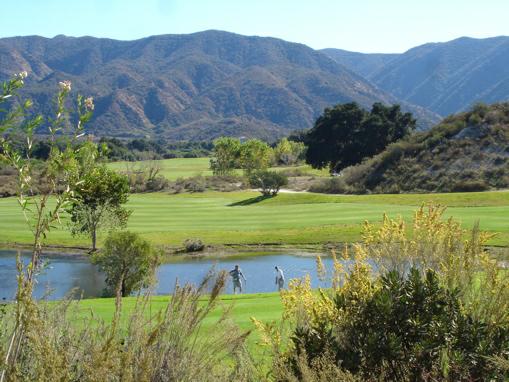
See full size imageThere are several public and private golf courses in Santa Clarita, including TPC, Valencia, Valencia Country Club, and Vista Valencia. 
See full size imageThe city is home to a public ice skating rink called the Ice Station Valencia.


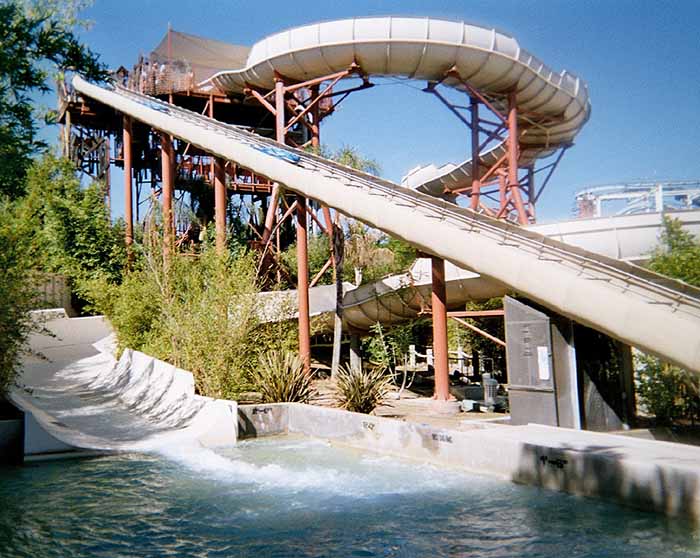
Valencia attracts millions of visitors every year to its' famous Six Flags Magic Mountain, and Hurricane Harbor.

 
See full size image


See full size imageen.wikipedia.org/wiki/Santa_Clarita,_California

www.city-data.com/city/Santa-Clarita-California.html

www.santa-clarita.com/ 

Chapter Three: Foundations of Human Activity


CANYON COUNTRY was the ancestral homeland of the Tataviam people for ovSee full size imageer five hundred years, and other tribes before then, such as the Tongva, Kitanemuk, and Serrano people.  After the Spanish invasion the valley first became grazing lands of the Mission San Fernando Rey de Espana around 1790.  In 1834, after Mexican Independence, it became part of the Rancho San Francisco land grant centered on the merging of the Santa Clara River and Castaic Creek.

In the 1880’s the rancho became the Newhall Ranch empire of Henry Newhall, now the present day Newhall Land and Farming Company.  In 1928 the St. Francis Dam collapsed, suddenly flooding and washing away settlements and people along the Santa Clara River section of present day Canyon Country.  In the 1960’s and 1970’s the Newhall Land company’s suburban developments transformed Canyon Country and its surrounding towns into a focused residential and cultural city.


VALENCIASee full size image was first planned in the 1960s by the Newhall Land and Farming Company. Development began in the 1960s and continues to the present day. Valencia is notable for its landscaped boulevards connecting a mix of apartment buildings, single-family detached homes, shopping centers, office parks and industrial warehouses.


NEWHALLSee full size image is named  after Henry Newhall, a businessman who made his original fortune during the California Gold Rush after opening up the H.M. Newhall & Company; an extremely successful auction house in San Francisco, CA. Newhall's next business interest was railroads. He invested in rail companies that would connect San Francisco to other cities and became president of the San Francisco and San Jose Railroad. In 1870, he and his partners sold the company to Southern Pacific Railroad, whose board of directors he then sat on. After railroads, Newhall turned his eye to real estate and ranching. He purchased a number of the old Spanish and Mexican land grants in the state for a total of 143,000 acres (579 km2) between Monterey and Los Angeles counties. The most significant portion was the 46,460-acre (188 km2) Rancho San Francisco in northern Los Angeles County, which he purchased for $2/acre, and which became known as Newhall Ranch after Newhall's death. Within this territory, he granted a right-of-way to Southern Pacific through what is now Newhall Pass, and he also sold them a portion of the land, upon which the company built a town they named after him: Newhall. The first station built on the line he named for his hometown, Saugus, Massachusetts. Following his death, Newhall's heirs incorporated the Newhall Land and Farming Company, which oversaw the development of the communities that now make up the city of Santa Clarita. On September 26, 1876, Charles Alexander Mentry brought in the state's first productive oil well at Mentryville, giving rise to the California oil industry. The oil was brought to a refinery at Newhall; today it is the oldest existing refinery in the world. (It was operational from 1874 to 1888.) 

SAUGUS is names after Saugus Massachusetts.  See full size imageIn 1987 Saugus and three other communities - Newhall, Canyon Country, and Valencia - were combined and incorporated, becoming the city of Santa Clarita.


DEMOGRAPHICS


Historical populations
Year
Pop.
 %±
110,642
—
151,088
36.6%
2010(est)
177,641
17.6%
source:


As of the census of 2000, there were 151,088 people, 50,787 households, and 38,242 families residing in the city. The population density was 1,219.6/km² (3,159.1/mi²). There were 52,442 housing units at an average density of 423.3/km² (1,096.5/mi²). The racial makeup of the city was 59.02% Non-Latino/Non-Hispanic White, 20.50% Hispanic or Latino of any race, 8.54% from other races 5.24% Asian, 3.89% from two or more races, 2.07% African America 0.59% Native American 0.15% Pacific Islander.


There were 50,787 households out of which 44.4% had children under the age of 18 living with them, 61.0% were married couples living together, 9.8% had a female householder with no husband present, and 24.7% were non-families. 18.7% of all households were made up of individuals and 6.1% had someone living alone who was 65 years of age or older. The average household size was 2.95 and the average family size was 3.38.


In the city the population was spread out with 30.3% under the age of 18, 8.1% from 18 to 24, 33.6% from 25 to 44, 20.8% from 45 to 64, and 7.1% who were 65 years of age or older. The median age was 33 years. For every 100 females there were 98.0 males. For every 100 females age 18 and over, there were 94.4 males.


According to a 2007 estimate, the median income for a household in the city was $79,004, and the median income for a family was $91,450 Males had a median income of $53,769 versus $36,835 for females. The per capita income for the city was $26,841. 6.4% of the population and 4.7% of families were below the poverty line 6.7% of those under the age of 18 and 5.9% of those 65 and older were living below the poverty line.


In 2000, the total population of Saugus was 41,743, and its population density was 218 persons per square mile. The median age is 32.8 years. Average number of people per household is 3.1. 66.7% of the population is married; 33.3% are single. Median Household income is $80,940; per capita income is $29,816. Median home value is $532,700. 82.4% of homes are owner-occupied; 14.8% are rentals.

www.wikipedia.org/wiki/Santa_Clarita,_California
www.santa-clarita.com/
www.city-data.com/city/Santa-Clarita-California.html